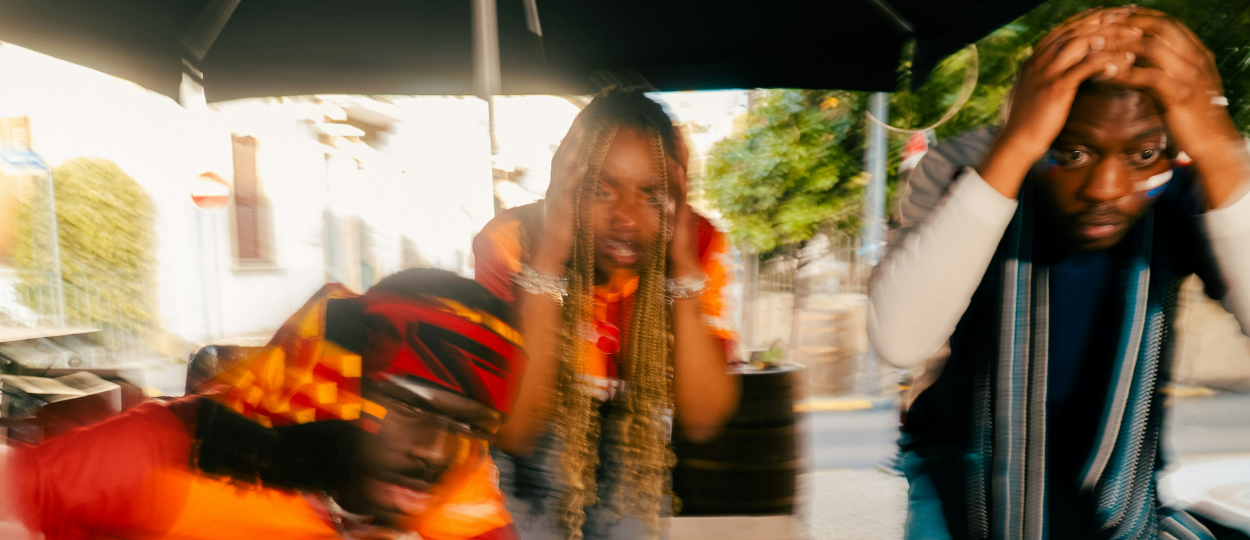
The World Cup can trigger intense stress responses that closely resemble the body’s reaction to real threats, making anxiety management just as important as enjoying the game. Understanding how THC, CBD, breathing techniques, social environments and sensory boundaries affect the nervous system can help turn 90 minutes of tension into a more balanced and enjoyable experience.
Blood, sweat and tears. Soccer, soccer, soccer. Goal, goal, goal, there’s a goal in your head. The ultimate soccer phenomenon, the World Cup, is gearing up for its most ambitious edition yet: its rendezvous in the United States, Mexico and Canada, in a matter of days. As such, this event stands not only as an elite sporting competition, but rather as a massive experiment in psychological and chemical endurance. Enjoyment is supreme. But tension, well, it also reigns.
The anxiety generated by a tournament of this magnitude, where national identity and emotional investment collide in a 90-minute window, requires an approach that combines patience with the conscious management of well-being. For the cannabis user, this means understanding that the plant is not a passive spectator, but a player that interacts directly with the central nervous system.
That’s right: World Cup matches are a biological red alert. For millions of viewers, from the luminous chaos of Los Angeles to the mystique of Azteca Stadium, passing through the corporate coldness of Toronto, cortisol levels are about to skyrocket. A tsunami of stress is coming. It’s time for emotional shipwreck.
That’s why psychiatrist Dr. Ángeles García Vara, with a postgraduate degree in medicinal cannabis, breaks down the mechanisms of sports panic and offers some tools to stay grounded when the clock starts ticking. Amid this neurochemical storm of adrenaline and goals, Dr. García Vara points out that “the endocannabinoid system appears as the guardian of balance and homeostasis.” Noted, Doctor. And if you’re traveling to any of the host cities, please check the local laws before lighting up anything!
Your Brain Can’t Tell A Penalty Kick From A Predator
The specialist hits the nail on the head: the human brain, despite its evolution, retains primitive mechanisms that struggle to distinguish between a real physical threat and the stress of a knockout match. For the nervous system, a penalty kick triggers the same responses as an encounter with a predator in nature. According to the specialist, the body enters a “fight or flight” cycle where the heart rate rises, breathing becomes shallow and the capacity for logical reasoning is clouded by emotional urgency. No judgment: we’ve all been there.
In this context, Dr. García Vara warns that the key is not trying to eliminate anxiety, a practically impossible task given the nature of the spectacle, but learning to live with it functionally. “World Cup anxiety should be understood as excess energy. The problem isn’t feeling it, but letting it take the wheel of our decisions and behaviors,” the psychiatrist maintains, emphasizing that validating the feeling is the first step toward controlling it.
“World Cup anxiety should be understood as excess energy. The problem isn’t feeling it, but letting it take the wheel of our decisions and behaviors.”
Dr. García Vara
How THC And CBD Hit The Nervous System
The key point is this: “THC and CBD act on CB1 and CB2 receptors, regulating neurotransmitter signaling,” explains García Vara. However, cannabis has a biphasic effect: at low doses, it relaxes the body, but at high doses, it can produce the opposite effect, increasing panic or paranoia just when VAR starts reviewing a penalty against your team. The specialist suggests that “CBD is more predictable and anxiolytic because it’s a modulator that decreases THC’s ability to bind to the brain receptor, reducing the psychotropic effects” and preventing the tachycardia of the match from becoming an overwhelming experience. In simpler terms, CBD can help soften THC’s intensity so the high doesn’t spiral into a mental breakdown.
Set Boundaries And Skip The World Cup Combo
During the 90 minutes of each match, the average spectator is subjected to a dopamine and adrenaline rollercoaster. In North American venues, where consumer culture and digital immediacy are the norm, social media overstimulation can pour fuel on the fire of anxiety. Dr. Ángeles García Vara suggests that one of the most effective ways to manage tension is to establish sensory boundaries. This means that, while the match is underway, the individual should try to anchor themselves in the present through concrete physical stimuli.
Here, Dr. García Vara offers a critical perspective on the World Cup “combo.” Mixing high doses of cannabis with xanthines (caffeine, yerba mate or energy drinks) makes us more prone to increased physical symptoms of anxiety. And alcohol? “Alcohol potentiates the effects of marijuana because it increases THC levels in the blood, which can lead to a panic attack or loss of reflexes,” warns the psychiatrist. The key is not to numb our experience, but to use weed intentionally: to ask ourselves if we want cannabis to socialize, to relax the body or to get into a chill mood. In short, what’s worth knowing: cannabis isn’t for “enduring” the game, but for “experiencing” it more consciously.
Breathe Like You Mean It
And with this momentum, the doctor pulls out the survival manual: the diaphragmatic breathing technique, inhaling deeply, expanding the abdomen and exhaling slowly, is a biological tool to “hack” the nervous system and send a calming signal to the brain. If cannabis is used correctly, rescue medication might not be necessary, but it’s vital not to rely solely on the substance. In that sense, Dr. García Vara recommends combining microdoses, especially flowers with a balance of THC and CBD, with techniques like physiological breathing to quickly reduce CO₂ and muscle tension. “If you’re a frequent user, you’ll develop a tolerance that requires higher doses, but for these events, it’s better to find an active break that alleviates the symptoms without losing track of the game,” she maintains.
Choose Your Crowd
Meanwhile, the social factor in Mexico, Canada and the United States plays a decisive role. As a tripartite World Cup, the massive gatherings and peer pressure can raise stress levels. Dr. García Vara indicates that it is crucial to recognize which environments amplify our anxiety. If a group of friends fosters hostility or catastrophizing with every play, mental health dictates that it is preferable to seek a more neutral environment.
“Emotional contagion is real and very powerful in soccer. Surrounding yourself with people who practice realistic optimism or who have a more playful relationship with the sport can be the difference between an enjoyable afternoon and a nervous breakdown,” explains the doctor. For her, managing anxiety also involves prior preparation: having slept well and not arriving at the match on an empty stomach are physiological factors that increase frustration tolerance.
After The Final Whistle
Finally, the impact of the final whistle must be considered. The whistle blows. It’s over. C’est fini. Time to head home. Dr. Ángeles García Vara warns that the end of the 90 minutes doesn’t mean the immediate end of the hormonal surge. Why? Football fans understand: whether it’s the euphoria of victory or the emptiness of defeat, the body needs a “cooling-off” period.
Excessive THC use can generate an “anxious hangover,” a feeling of irritability or insomnia in the following days. Therefore, the recommendation focuses on transforming the experience into that of an individual in control of their emotions. “If you’re enjoying a joint during the World Cup, savor it and share it,” concludes Dr. García Vara, always mindful of the set and setting (mindset and environment) to avoid compromising your peace of mind. The psychiatrist also recommends doing some light physical activity or a simple manual task after the match to help process the excess energy. Hard mode, folks.
“Football is a powerful narrative, but it shouldn’t be the only thing that defines our stability,” concludes García Vara. By understanding the neurochemical processes triggered during this World Cup, passive and anxious spectators can benefit from becoming self-regulating individuals and, most importantly, to enjoy the sport’s biggest event without compromising their peace of mind. Stating it seems easy. And the doctor’s words certainly sound logical. Now, putting it into practice, well, we’ll see: the fate of our emotions rests in the hands, or feet, of 22 dudes chasing a ball.