This article originally appeared in High Times’ 50th Anniversary print issue. Get yours here.
In the Rif Mountains, Indigenous Berber farmers have grown cannabis for generations and gone to prison for it. Now the country wants their hash on the global medical cannabis market. A dispatch from Morocco’s kif country with veteran activist Abdellatif Adebibe.
Morocco’s Kif Economy
By the numbers.
5,000
People pardoned by Mohammed VI for illegal cannabis growing
15,000
Men sentenced over the years for farming cannabis
4%
Of illegal market profits that reached Rif farmers
$15B
Projected size of Morocco’s legal cannabis market
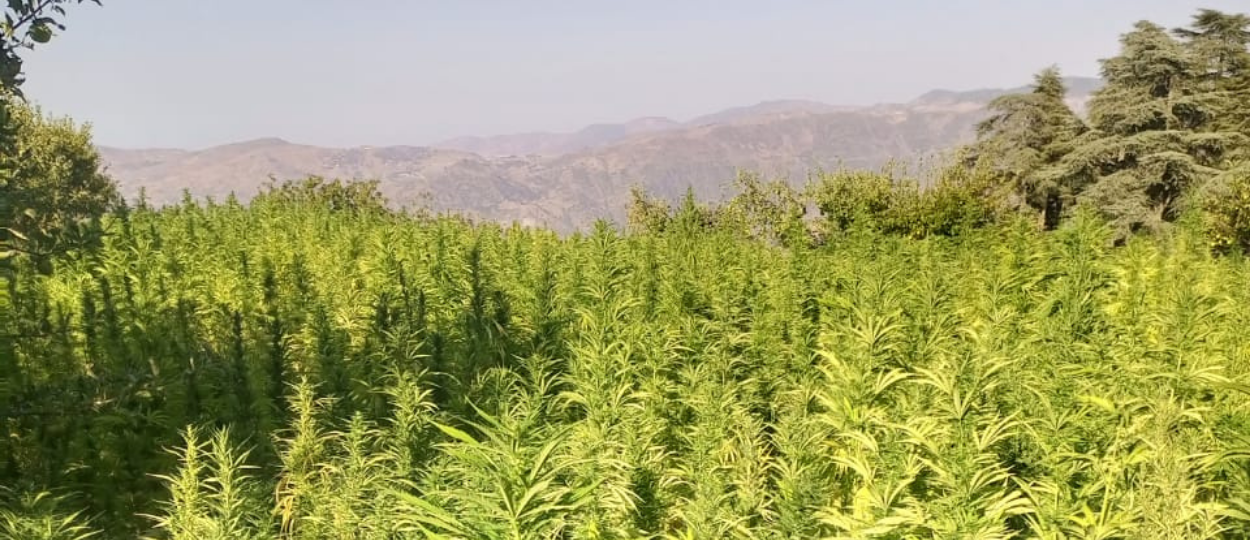
In the Rif Mountains of Morocco, the cultivation of kif (the word for cannabis in Arabic, which means “pleasure”) has long sustained thousands of Indigenous Berber farmers and their families, despite colonialism, state repression and ongoing structural inequalities. “We have resisted to preserve the temple of the plant,” says veteran reform activist Abdellatif Adebibe, as he smokes from a wooden pipe filled with Morocco’s endemic Beldiya strain, mixed with tobacco.
Adebibe, 70, would like to take his final breath, whenever that day may come, in the simple home where he was born in Morocco’s impoverished High Central Rif, which is, for him, the temple of kif. It’s a remote region where tall cedar trees line the hillsides some 1,600 metres above the nearby Mediterranean sea and, according to a myth popular with the locals, where Noah is said to have built his ark. But first, he wants to complete his mission to help liberate his people from the tyranny of anti-cannabis laws, which sometimes saw peasant farmers arrested as drug traffickers for producing Morocco’s vaunted hashish.

The King’s Pardon
That future came a step closer last year, when Morocco’s king Mohammed VI issued a royal pardon for almost 5,000 people convicted or wanted over illegal cannabis growing. In 2021, the country had legalized cultivation for medical purposes across three provinces, in a first for a Muslim country. At the time, Adebibe alluded to a song sung to welcome the Prophet and said the full moon had just appeared.

“We want to escape from being persecuted, but thanks to God now we will be ok, we just need to find a way to export,” says Adebibe, lamenting how countries which have legalized cannabis usually have strict controls over imports.
“We are also fighting for [permission to launch] an eco-tourism project so that people from all over the world can come here and experience our culture,” he adds. That vision includes legal coffeeshops and avenues for tourists to visit kif plantations, currently forbidden. Still, it’s not difficult to find a tucked-away cafe to smoke kif from a long terracotta and wood pipe in Chefchaouen, the home of illegal cannabis tourism in Morocco.

With some Rifian villages destitute, roads in disrepair and a general lack of basic infrastructure, Adebibe says it’s a no-brainer for Morocco to take its reforms one step further and bring cannabis tourism out of the shadows. “They need to legalize it because it’s a natural plant,” he says, “We have the knowledge to make the number one [cannabis globally].” He’s backed by his 30 years of campaigning, which has taken him to the UN in New York and Vienna, as well as South Africa and Jamaica.
When the State Was Absent
How long Rifian farmers have grown cannabis is unclear, but it has certainly been for several hundred years. Adebibe claims it is a thousands-year-old native plant, and rejects the well-documented evidence that cannabis somehow originated in India. Certainly, however, it was not until the early 70s when growers in the Rif began adopting the Asian method of collecting the resin from cannabis flowers and compressing it into hashish, a more potent product that was also easier to transport abroad.
“When the state was not shouldering its responsibility towards this region, the drug baron was taking care of us by buying the crop every year.”
— Rif farmer, to Bloomberg, 2022
“The drug baron is the cornerstone of the community,” a farmer said to Bloomberg in 2022, reflecting the deep mistrust of central authorities and big business. “When the state was not shouldering its responsibility towards this region, the drug baron was taking care of us by buying the crop every year.”
Moroccan hash quickly flooded Europe and fuelled countercultures as dealers like the Welshman Howard Marks, better known as Mr Nice, gained notoriety, fame and wealth. But today, in the Muslim country, even as cannabis becomes legal around the world, kif remains extremely stigmatized, says Khalid Tinasti, a research associate at the Switzerland-based Centre on Conflict, Development and Peacebuilding.


“15,000 men were sentenced over the years for farming cannabis. It caused socio-economic problems because men ran away from their homes. And so until recently you’d find families where there were just women and children,” he adds, detailing how the state criminalized entire villages. Even today, despite the reforms, “young men in the poorest parts of the country are still going to prison for smoking a joint,” Tinasti adds.
And yet, kif is everywhere. “You want happy?” hash-cake sellers in surf towns ask tourists discreetly, while holding very indiscreet platters of psychoactive baked goods. Other dealers mumble “hashish, kif?” with less poetic verve but equal sincerity. In Marrakesh, the smell of hashish sometimes wafts into your orbit, though, as in other cities, it’s not sold as openly.
What Comes Next
The prices for foreigners may start astronomically high, but they can go as low as $2 per gram. Equally, the quality can vary wildly, depending on where you are, from dried-out bunk to the most delectable hashish you are ever likely to smoke. Perhaps the dealers are right to put a premium on their product, which Adebibe refers to as the country’s “treasure”. The Rif’s farmers have reportedly been receiving about 4% of the profits from Morocco’s illegal market, but that figure could triple once all sales are legal, even while the market expands significantly, potentially reaching a staggering $15 billion.


Still, there are serious concerns that small growers could be left out of a legal market, as they have elsewhere in the world, with the Rif’s legacy of defiance co-opted rather than preserved. “Multinationals want to get their hands on it,” says Adebibe. “But it is our cultural heritage. It brings you up. [When you smoke kif] You’re very lucid, very calm, you think well, you eat well, and you make love well.”
“You’re very lucid, very calm, you think well, you eat well, and you make love well.”
— Abdellatif Adebibe
For him, Morocco has everything in place to be a global cannabis leader: history, expertise, climate, quality and reputation. In the days following our conversation, Morocco officially entered the international medical cannabis market with its first export, of 50kg of Beldiya, to Australia, the beginning of a new chapter where the crop is no longer sped out on Zodiac boats, but shipped legally. It is the natural next step, perhaps, for a plant that has been a quiet ally in the Rif’s long battle for dignity and autonomy, representing both heritage and contraband, lifeline and liability, caught between centuries of rebellion and an uncertain future.
As the summer’s harvest ends in late August, Adebibe is positive about what the future holds, while remaining philosophical. “This is a story of man, and kif.”
The Rif Reforms
2021: Morocco legalizes medical cannabis cultivation in three provinces.
2024: King Mohammed VI pardons almost 5,000 people convicted or wanted for illegal cannabis growing.
2025: First legal export. 50kg of Beldiya hashish shipped to Australia.
The fight continues for the farmers who built the trade.