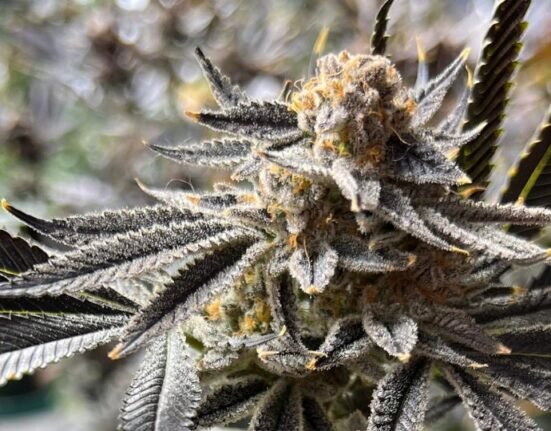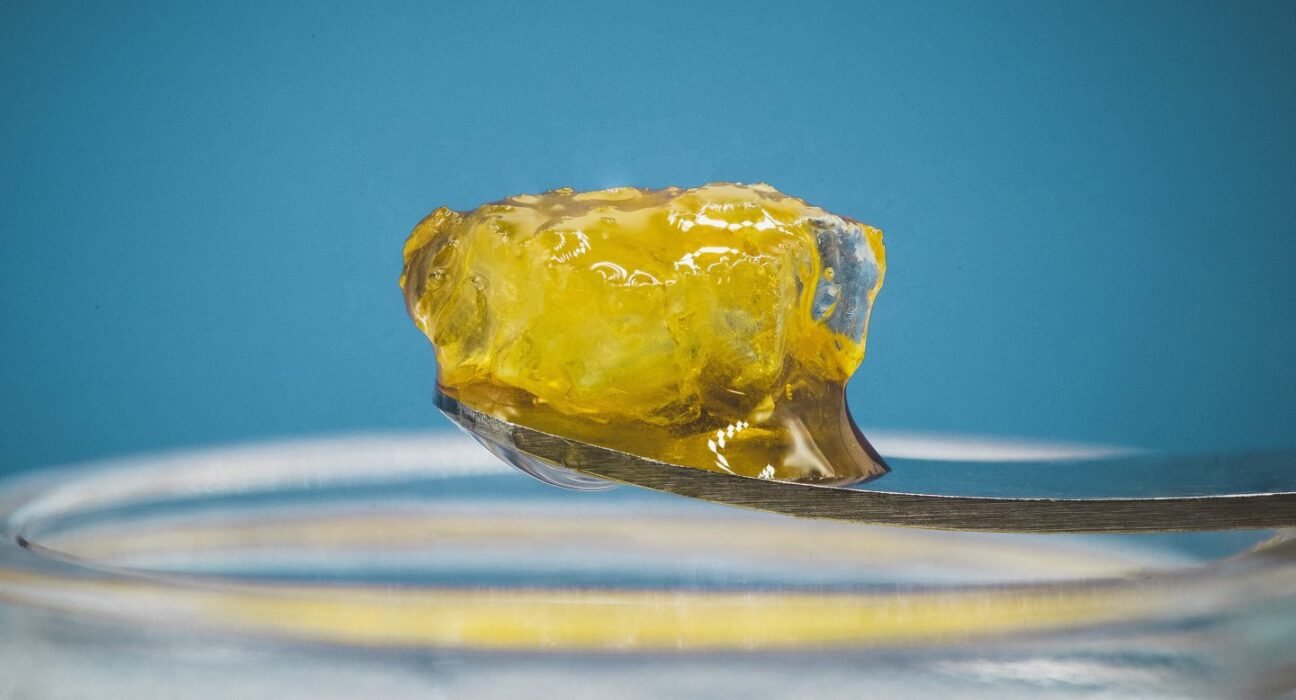
At MPX, every concentrate starts long before it reaches the extraction lab. The brand has spent more than a decade focused on concentrates, from its signature hydrocarbon extraction to MPX ORO, its newest line of hand-crafted solventless products. Today the company builds that work around one idea: start with the flower and let the plant do the talking.
Inside MPX, that idea has a shorthand. “Fire in, fire out” describes the two halves of the process, with cultivation responsible for what goes into extraction and the lab responsible for what comes out. In New York, Senior Cultivation Manager John Butcher handles the first half. In New Jersey, Sedrick Ledreau leads lab operations in Pleasantville.
“Butcher is the ‘fire in,’ and Sedrick is the ‘fire out,’” said Sigrun Kalatschan, regional marketing manager for the Northeast. “While they’re in different markets, I can see how John and Sedrick’s roles complement each other and translate well into the story of our company across states.”
Fire In
For Butcher, the work begins with the plant itself. “What got me into growing was the love of the plant,” he said. “Its flowers can display such a variety of colors, shapes, and aromas.” He was fascinated with searching out the best weed he could find. “I always wanted to have the best jars and bring the heat to all the functions,” he said. Part of that freedom to explore came from linking up with Chad Salute of Kush Alley and Maven Genetics in California’s San Fernando Valley.
Kalatschan calls him “the artist behind our NY cultivation.” He leads cultivation at the company’s facility in Warwick, New York, where the team grows craft cannabis, builds a genetic library and develops an internal breeding program. “We got some big things coming!” he said.
His definition of fire in is direct. “Fire in means that this whole thing doesn’t work without a solid cultivation program,” he said. “Cultivation has to put out the best in order to hold that line through post production, trim, extraction etc.” That standard starts with the right cultivars and a strict quality control program, along with something harder to measure. “The passion, love and determination it takes to make good flower be great flower, top shelf, craft cannabis,” he said.

What a Keeper Has to Prove
Much of Butcher’s work right now centers on pheno hunting. The team pops seeds from respected, vetted breeders, evaluates the progeny and decides which plants continue down the line. His checklist runs from structure, pest and mold resistance and the root zone to trichome density, leaf-to-calyx ratio, yield, bag appeal and the cure. The final test is the smoke itself, and flavor translation is the box he singles out. “That’s one of the most important boxes that it needs to check!” he said. “Does it translate the nose and aroma on the inhale and exhale.” When a plant clears all of it, he said, “you got a winner!”
That process is the foundation of First Batch, a brand built around the team’s vetting and pheno hunts. According to Kalatschan, Butcher is “a skilled pheno-hunter, so much so that we actually created a brand around his first batch harvest.” The packaging carries a QR code that lets customers send feedback directly to Butcher. “Having the QR code brings the consumer into the grow,” he said. “Not all genetics will make it. We know what we like and will move those along, but we also want to know what the consumer is looking for.”
Fire Out
In Pleasantville, New Jersey, Ledreau holds the title of senior manager of lab operations and innovation, though he says the day-to-day job boils down to being a mentor and a creative. “A lot of my time is spent asking ‘What if,’” he said. “That curiosity and my creativity really produces some wild ideas.”
By Ledreau’s account, MPX became a flower-first company around the beginning of 2025. Deciding which cultivars go to solventless and which go to hydrocarbon comes down to historic production data and the physical structure of the flower. “Some cultivars wash very poorly but do well in hydrocarbon, and vice versa,” he said. Flower that extracts poorly can still go to shelves if it smokes well, and a cultivar that does poorly as flower, solventless and hydrocarbon gets cut from the garden.
In New Jersey, Ledreau’s preferred fire in comes from the Pleasantville cultivation team led by Justin Stewart. “Justin and his team have certainly become my preferred input source,” Ledreau said. “I’d rather wash our own bud over anyone else’s.” From there, technique decides the outcome, from whether rosin needs to be taffied to whether it should be backfilled with nitrogen to how much ice a run needs. “The decisions on technique make or break a production run,” he said.
The house phrase “respect the terps” shows up on the production floor as attention to detail. “We don’t make batches that aren’t good enough,” Ledreau said. “That’s not arrogance. That’s us making sure we bring it every day.” The team leaves its own mark on the work, too. Blends sometimes get playful names chosen as a group, including a recent batch of pioca Ledreau made called Screaming Goat. “We show up in the product all the time in one way or another,” he said. “It’s actually very intimate if you think about it.”

Why ORO, Why Now
MPX ORO is the newest showcase for that work. MPX has made solventless products before, though ORO is described as a more hand-crafted, artisan-style approach to solventless. The line is rolling out in New Jersey and Massachusetts, starting with fresh-pressed rosin, mechanically separated diamonds, and sauce and bowl toppers, with new releases arriving each month through December.
Asked why MPX is launching it now, Ledreau answered with questions of his own. “Why not now? Why not break the MSO stereotype now? Better late than never,” he said, using industry shorthand for multi-state operators. He sees two different markets for the line. Massachusetts is more mature and has a large solventless customer base, and pioca was created specifically for it. “A lot of people there like wetter hash, so we answered,” he said. In New Jersey, where solventless operations have been limited, the launch was about “striking the iron while hot.”
Pioca comes next, followed by cannoli. “The Cannoli is much more artisanal,” Ledreau said. “Every batch needs to be hand crafted with a high attention to detail. Buy it when it’s in stock, because quantities will be limited to begin with.”

Where to Start
For anyone new to MPX, Ledreau’s recommendation depends on how they already consume. Dabbers get a gram of diamonds and sauce, his own favorite. Flower smokers get bowl toppers, which he calls the entry into concentrates for people who prefer flower. “Toss it in your bowl, bong, bubbler, e-vape, joint, spliff, blunt…whatever means you employ,” he said. “It allows you to experience concentrates without having to fear them.”
He also urges care, starting with diamonds and sauce. “I’m a heavyweight dabber, and that product will couchlock me,” he said. His advice for anyone who isn’t a regular dabber is simple. “Go slow at first. It doesn’t take much.”
From Butcher’s pheno hunts in Warwick to Ledreau’s lab in Pleasantville, MPX describes the standard the same way at both ends of the process. “Respect and care for the product, and it will return that love,” Ledreau said. MPX ORO is rolling out now in New Jersey and Massachusetts, with new releases arriving throughout 2027.
Photos courtesy of MPX
Sponsored Content Disclosure: This article was produced by High Times in partnership with MPX as part of a paid sponsorship. High Times developed and edited the story using interviews and information provided by MPX representatives. All editorial content remains subject to High Times’ standards for accuracy, sourcing, and publication.