Cannabis grower and edibles pioneer Maya Elisabeth makes the case that your sourdough starter is basically a mother plant. You feed her, she feeds you, and she carries your culture across generations. A warm love letter to two of life’s simplest pleasures, and why the things that bring the most joy always seem to get villainized.
Have you ever been stoned out of your gourd, the munchies setting in, and enjoyed a perfectly toasted piece of sourdough with salted butter and jam? It turns out these two have more in common than both being deeply satisfying and making life better in general.
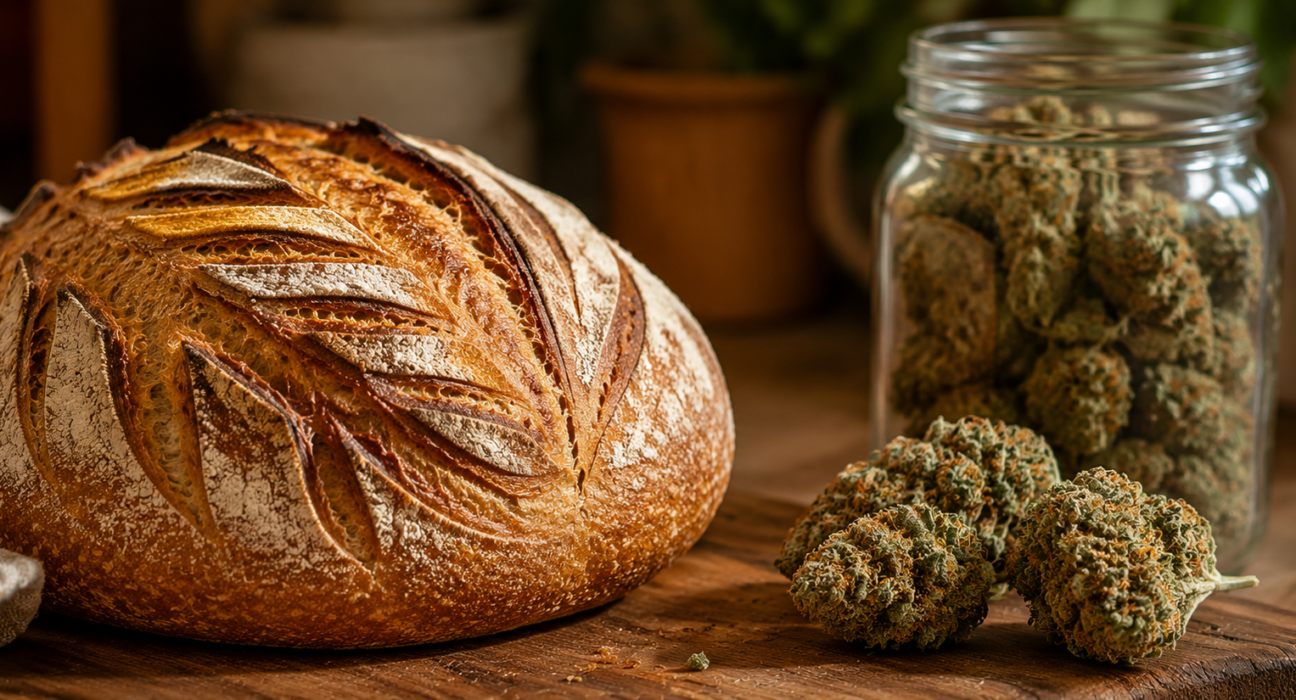
Maybe it was Covid. Maybe it was cannabis legalization. Maybe it’s the timeless joy they both bring. But now, more than ever, sourdough and weed seem to be eternally trending topics and regular dinner-table conversations. The cultural nuances are layered and poetic, and it turns out that sourdough starters and baking bread have far more in common with growing weed than they don’t.
Before we begin, this one especially goes out to the hobby growers who may not be growing anymore. If you still have the urge to nourish something to fruition and harvest a yield that saves you money and makes you feel proud, consider picking up sourdough baking if growing weed is no longer an option.
Start at the Start: The Starter
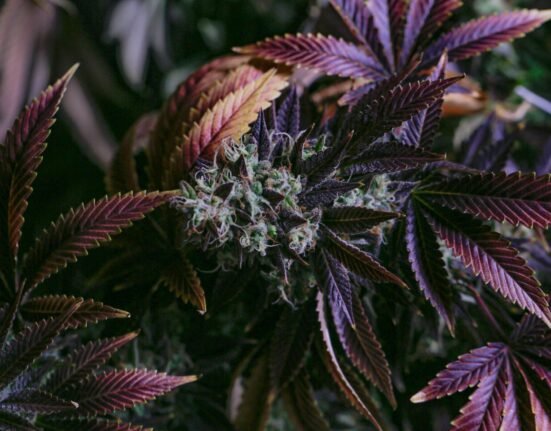
Anybody who can make a clone can keep a sourdough starter. A starter is like a mother plant: the one that keeps your genetics and interacts with the terroir. You give to her, she gives to you. You feed her often and she feeds you often. A mutually beneficial, symbiotic relationship, and a keeper of your culture. She takes on the qualities of her environment, lending subtle and unique notes to the breads you bake.

It’s best if you can be given a fresh starter to begin a sourdough journey, but they can also be bought online. Just like genetics or seeds, they come with a story of land, flavor and culture. Not nearly as tight-gripped as some cannabis genetics, but still on the “gotta know someone” vibe at times.
San Francisco is famous for its sourdough starters and culture, producing a notably sour bread. SF is also famous for producing some of the most famous cannabis strains in the world, like Cherry Pie, Girl Scout Cookies, Sherbert and Gelato, just to name a few. The Amish and Mormons have long carried sourdough starters that survived hundreds of years. Distinct sourdough traditions span France, Italy, Germany, Russia and so many more. It seems almost every culture has a fermented starter of some sort, and the ones that exist today have been passed down through family members, mostly women who keep the hearth and tend the home.

Both Have Been Getting Baked for Eons
Aside from both getting baked for eons, cannabis and sourdough both love a heating pad and a little humidity in the early stages of life. Each time you stretch and fold to build gluten in your dough, or prune and foliar-feed your ladies, every tickle is a nickel: the love you put in can be tasted and felt.
Just like growing cannabis, making sourdough can be approached from a technical angle, a medical angle, or even a spiritual one. Sourdough is widely considered good for the gut, with probiotics, lower gluten, and more protein than conventional bread, the kind of wholesome food that tends to lift your mood as much as your body. Maybe that’s part of why both have such devoted followings.
The gist of keeping a starter is that every day you discard some to bake with, and every day you feed it a little flour and water. When you don’t feel like baking, you feed the starter and put it in the fridge, where it lays dormant until you pull it back to room temperature and feed it again.
Since flour and water cost next to nothing, and the equipment to begin is minimal, there’s a relatively low barrier to entry compared to indoor cultivation. And because baking sourdough isn’t criminalized the way cannabis is, it’s generally lower risk to get started and to access information. The odor won’t get you robbed, thrown in jail or evicted.
Start Low, Like a First-Time Grower
If you’d like to start baking sourdough, as with starting anything you’re somewhat serious about, consider using one easy, low-hydration recipe consistently to begin. That helps cut down on the variables and lets you dial in the craft. Starting with a lower-hydration recipe is just like first-time growers starting with easy-to-grow indica strains and shorter cycles. Starting with a high-hydration recipe would be like trying to grow a long-flowering sativa like Haze on your first round.
As I dove deeper, the synchronicities kept revealing themselves, my weed-nerd lightbulbs going off again and again like a chain of cognitive rewards. Both have been heavily stigmatized at times. How many times have we been told that weed, gluten and carbs are bad for us, when it turns out the cultures in sourdough can be genuinely good for us, just as a growing body of research keeps finding real value in the compounds in cannabis?
Looking at the stigma they share, you have to wonder: is there something about the things in life that bring the most joy, in a simple or old-fashioned way, that take just a little dedication and love and know-how, that gets them villainized, slandered or devalued?
Why is it that they don’t want us to have nice things?
Like a plant that grows like a weed almost anywhere, that you can tuck into your backyard, where the roots, fruits, seeds, buds, leaves and stalk are all usable and of value. Or something as simple as mixing flour, salt and water and leaving it on the counter to make year-round, wholesome creations that cost pennies to produce, even with all-organic inputs. Is it the joy and satisfaction? The sovereignty and self-sustainability? The healing and wellness we’re not purchasing? I’m not sure, but it’s interesting that there seems to be quite a bit of politics tangled up in the simple things that bring us freedom, health and joy.
Crispy, Sticky, and Best Among Friends
Sourdough and cannabis both help with the tummy: one makes you hungry, one makes you full. They’ve both been getting baked for eons. Both are best when crispy and sticky. Both are lovely among friends or solo, and always preferred organic. Both are great in a roll, a donut or a churro. Both develop complex flavors during a cold cure. One gets baked in an oven, one gets baked anywhere. Both have an attractive, recognizable, nose-grabbing smell. Both can be deeply spiritual, and both are mentioned multiple times in the Bible (sourdough shows up some 230 times). We even have receptors for both all over our bodies, and tastebuds lucky enough to receive all the delicious flavors and varieties.


As the playful nuances went on, I realized how compatible the sourdough and stoner lifestyles are, too. Both can revolve around a generally free and alternative schedule. Sourdough can be made around a 9-to-5, but it’s better when you’re home, watching and learning and reading your dough. Making sourdough can be the backdrop of your day, and laying low and chilling kind of gives you permission to chill, so in a sense it’s a complete lifestyle.
And remember: whether your approach is spiritual, traditional or technical, for every scientist or professional baker out there making it look complicated, there’s a stoner, earthy lady like me telling you, “Don’t worry! You can do it!”
Bake From the Heart, Like You Grow
If you want to try your hand at sourdough, just like weed, taste as many different styles as you can to find out what you love. Read as many books as you want, watch as many tutorials as you desire, but at the end of the day you’re going to want to use your senses, just like we do when assessing cannabis. Use your eyes to notice the physical cues of a proofed dough. Use your nose to learn the fermentation stages. Use your touch to recognize a developed dough. Use even your ears to learn the signs of readiness and crumb density. If you ran out of batteries for your digital scale, or the power went out tomorrow, would you be able to eyeball a loaf and bake from the heart?
Becoming great at anything, especially growing weed, always involves a hands-on connection and breaking outside the texts and other people’s experiences to truly learn a skill. People have baked sourdough for millennia. They combined what they had available, tried to set the perfect environment and hoped it would stay active and rise.
Whether you’re on a cannabis journey curious about other forms of baking, or a baker who loves to enjoy cannabis, both are two of the best things in the world, in my humble opinion. Simple, healthy, all-natural and innocently delicious. To me, the more the Mary-er. Life is short. Plant the seed, break bread with your loved ones, and pass it to the left-hand side.
The views here reflect the author’s own experience and enthusiasm, not medical advice. Cannabis laws vary by location.