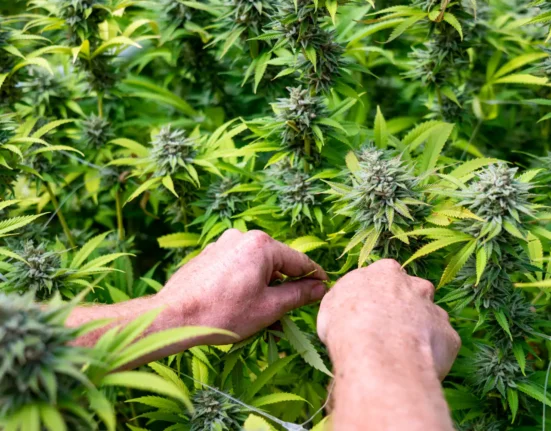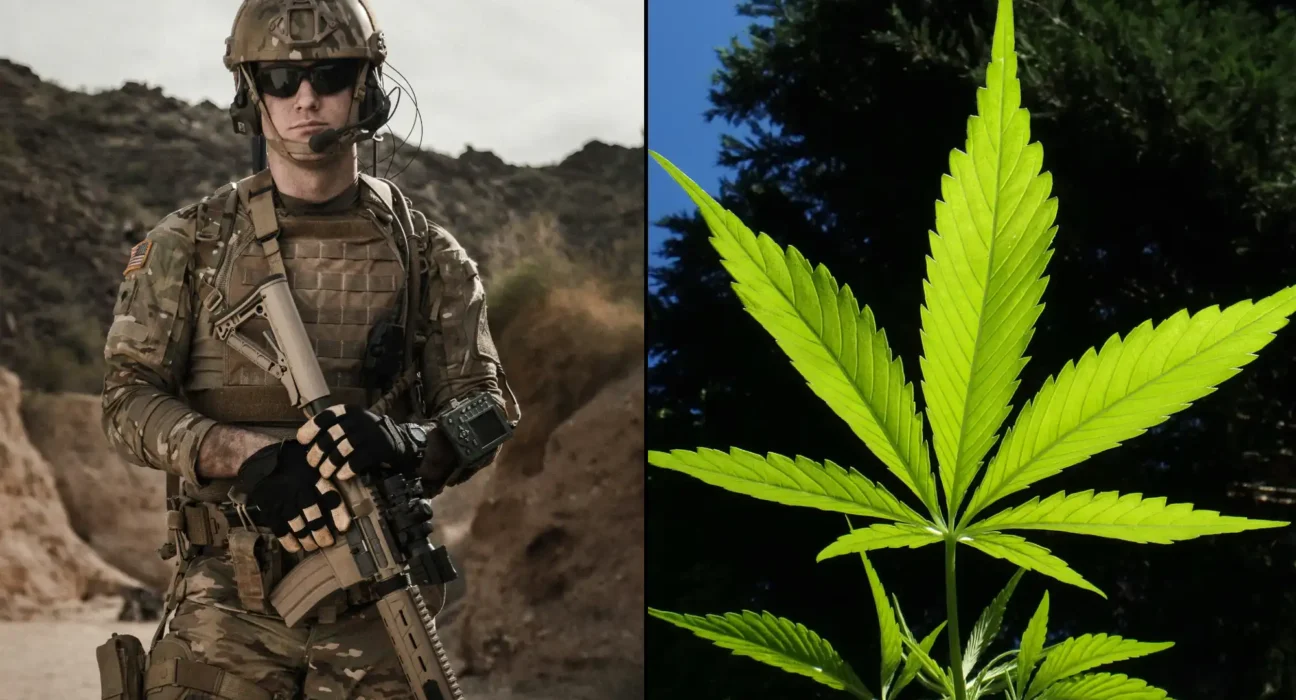
Even as the Trump administration recently finalized a medical marijuana rescheduling rule—and the president has pushed to maintain the legal status for full-spectrum CBD—the U.S. Army is making clear that it views all forms of cannabis and its derivatives as dangerous drugs that soldiers are banned from using.
In a blog post on Thursday, officials with Army’s Directorate of Prevention, Resilience and Readiness reiterated the military branch’s position that even CBD products such as infused creams and gummies “can pose serious risks to Soldiers and mission readiness.”
While CBD is “often perceived as a non-intoxicating alternative to marijuana,” Army policy stipulates that the cannabinoid is “not permitted.” All forms of cannabis—including marijuana, hemp and “all cannabinoid-containing products”—are banned under Army Regulation 600-85 “regardless of how they are marketed or consumed,” the article cautioned. States that permit the use of marijuana or hemp don’t change that policy, either.
Col. Kevin Goke, deputy director at the Army Directorate of Prevention, Resilience and Readiness, said the Department of War’s (formerly known as the Department of Defense) policy “keeps the Army community healthy and workplaces drug-free.”
“Soldiers are able to perform their duties to the fullest extent while maintaining the high standards required to defend the nation,” he said
Andrea Donoghue, program manager for the Army Substance Abuse Program, added that the “relationship between hemp, marijuana and CBD can be confusing, sparking debate on lethality and legality.” But in all cases, the military branch maintains a blanket ban that comprises everything from hemp-derived CBD to natural delta-9 THC in marijuana to synthetic cannabinoids that are “designed to mimic THC.”
Army has additionally expressed concern about the proliferation of intoxicating cannabinoids such as delta-8 THC that can be synthesized from hemp-derived CBD.
“Even common hemp items containing CBD, such as vape juices, food, hair care products, oils, lotions and other cosmetics, are prohibited for Soldiers as they can lead to positive drug tests and jeopardize military careers. Additionally, products labeled as ‘THC-free’ are not always reliable, as they may be inaccurately labeled or lack consistent quality control.”
“For Soldiers, the only safe and compliant path is to avoid these products entirely,” Donoghue said.
The post on Army’s website goes on to say that “all types of cannabinoids can pose risks to both physical and mental readiness.”
“Soldiers who use these products risk testing positive for THC and other banned substances,” it said, adding that positive drug tests for such drugs “can result in disciplinary action including loss of rank or loss of employment and benefits” under military code.
“Regardless of state legality or commercial availability, the Army treats these products the same. This zero-tolerance approach protects Soldiers, maintains a drug-free force and ensures mission readiness,” Donoghue said. “The Army’s goal is to build a healthy, ready and resilient force, recognizing that peak performance comes from fitness, mental toughness, proper nutrition and responsible choices. This commitment ensures Soldiers are prepared to perform at their highest level and accomplish the mission.”
Goke added that the “key takeaway for service members remains the significant risk posed by the unregulated consumer market, where THC contamination in commercial products is a documented and persistent problem.”
“Therefore, until these products are regulated with the same rigor as pharmaceuticals, Army policy AR 600-85’s zero-tolerance stance remains absolute to protect our Soldiers’ careers and ensure mission readiness,” he said.
Army officials concluded by stressing that “possession and use of cannabinoids, whether hemp-based or synthetic, is banned.” And while life in the military “can be challenging,” the use of cannabis or other drugs to relax, sleep or manage stress is a “sign to check in.” That could involve a participating in the Army’s substance misuse program, which is “available to help, not punish.”
The branch’s reaffirmation of its cannabis-related code for soldiers comes just months after the Army updated guidance making it so recruits will no longer need to obtain a waiver to enlist if they have a single conviction for possessing marijuana or drug paraphernalia on their records.
The updated regulations, which will also raise the maximum age for recruits from 35 to 42, are generally meant to expand eligibility opportunities for service in the military. And removing the marijuana waiver requirement for single possession offenses could significantly widen the candidate pool as laws around cannabis continue to evolve at the state and federal level.
When it comes to drug policy around use for active duty servicemembers, however, Army has generally been consistent.
In 2024, for example, Army specifically updated its drug policy to clarify that soldiers are prohibited from using intoxicating hemp cannabinoid products like delta-8 THC. It is further cautioned servicemembers against eating foods containing poppyseeds, which can produce false positives when testing for opioids.
The military branch’s prior policy enacted in 2020 made clear that the “use of products made or derived from hemp,” even if it’s legal for civilians, is prohibited for soldiers. But that guidance came before delta-8 and other intoxicating cannabinoids became a mainstream feature of the largely unregulated cannabis market.
Instead, the Army at the time focused on non-intoxicating CBD, which servicemembers are also barred from using. It remains the rule that prohibited cannabis products include those that are “injected, inhaled, or otherwise introduced into the human body; food products; transdermal patches, topical lotions and oils; soaps and shampoos; and other cosmetic products that are applied directly to the skin.”
“This provision is punitive, and violations may be subject to punishment,” it says.
The language of the earlier Army guidance seemed to apply to delta-8, even if it wasn’t explicitly mentioned, but the branch has since put the policy more clearly into writing.
Meanwhile, in a notice distributed in 2024, the Army reminded military members that former President Joe Biden’s pardons for federal marijuana possession offenses didn’t apply to violations of military drug policies.
Ever-shifting marijuana policies have prompted multiple military branches to clarify or adjust their own drug policies.
For example, amid the military’s ongoing recruiting crisis, the Navy in 2024 announced that it was expanding authority to grant waivers to recruits who arrive at boot camp and initially test positive for marijuana, instead of simply sending them home.
The change came shortly after a similar one was enacted at the Air Force, which reported in 2023 that it granted more than three times as many enlistment waivers to recruits who tested positive for THC as officials anticipated when they first expanded the waiver program in 2022.
For the Air Force in particular, this waiver program represented a notable development, as the branch instituted a policy in 2019 barring service members from using even non-intoxicating CBD, even if its derived from hemp and is therefore federally legal under the 2018 farm bill.
The Navy issued an initial notice in 2018 informing ranks that they’re barred from using CBD and hemp products no matter their legality. Then in 2020 it released an update explaining why it enacted the rule change.
In 2022, the Naval War College warned sailors and marines about new hemp products on the market, issuing a notice that said members may test positive for marijuana if they drank a Rockstar energy drink that contained hemp seed oil.
A Massachusetts base of the Air Force, meanwhile, released a notice in 2021 stating that service members can’t even bring hemp-infused products like shampoos, lotions and lip balms to the base. “Even if it’s for your pet, it’s still illegal,” the notice said.
Officials with the division also said in 2018 that it wants its members to be extra careful around “grandma’s miracle sticky buns” that might contain marijuana.
The Coast Guard has said sailors can’t use marijuana or visit state-legal dispensaries.
In 2023, the Department of Defense (DOD) said that marijuana’s active ingredient delta-9 THC is the most common substance that appears on positive drug tests for active duty military service members. The second most common is delta-8 THC, which is found in a growing number of hemp-derived products that are being made available, including in states where marijuana itself remains illegal.
One of the first attempts by the U.S. military to communicate its cannabis ban came in the form of a fake press conference in 2019, where officials took scripted questions that touched on hypotheticals like the eating cannabis-infused burritos and washing cats with CBD shampoos. That was staged around the time that DOD codified its rules around the non-intoxicating cannabinoid.
In 2024, a study found that 6 in 10 military veterans support marijuana legalization generally, while an earlier survey found more than 72 percent support among veterans for U.S. Department of Veterans Affairs (VA) doctors being able to legally recommend marijuana.