A unanimous Supreme Court ruled the government can’t strip your gun rights just because you smoke weed, and Justice Neil Gorsuch used the government’s own rescheduling to twist the knife.
Here is the short version. You can smoke weed every other day and still legally own a gun. The Supreme Court said so on June 18, and not one justice broke ranks.
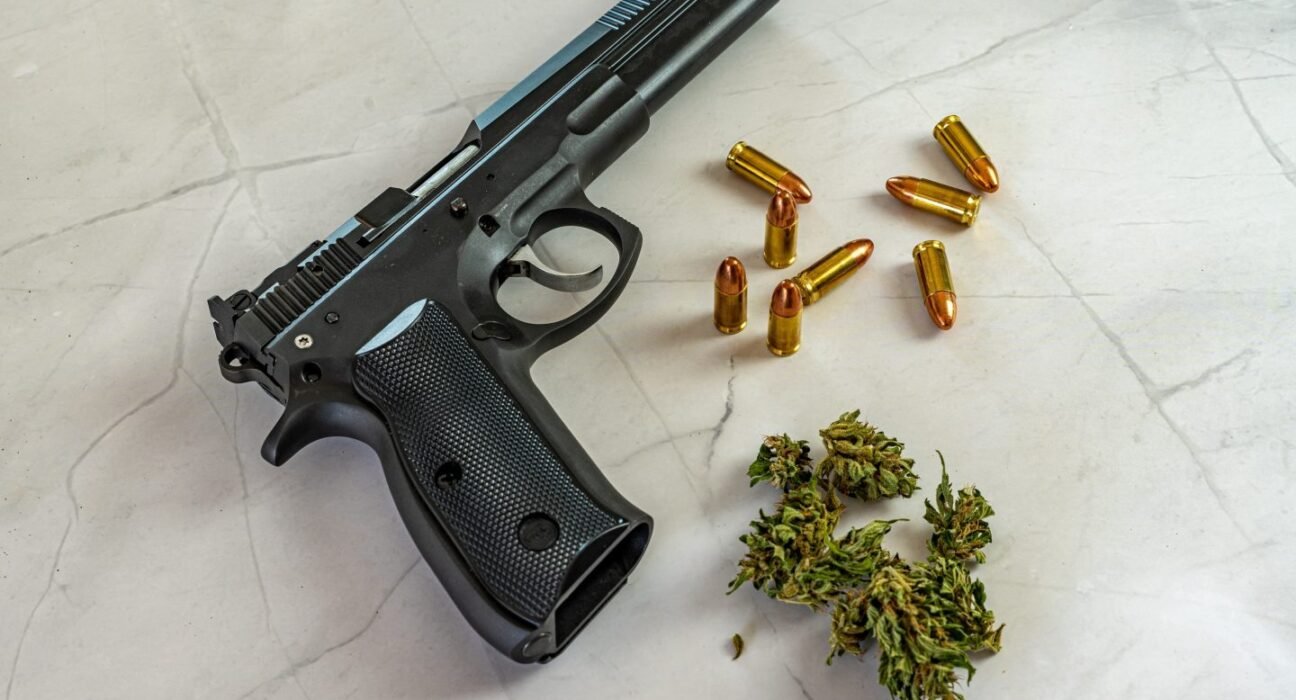
The 9-0 ruling in U.S. v. Hemani sided with Ali Danial Hemani, a Texas man who told federal agents he smoked about every other day. Agents found a Glock 9mm and 60 grams of weed in his house in 2022, and the government charged him under 18 U.S.C. § 922(g)(3), the federal law that bars “unlawful” drug users from owning a firearm. No other crime was charged. No gun waved around while high. Nobody hurt. The entire case was that he smoked, so he was dangerous, so the government could take his gun for life and put him in prison for up to 15 years.
Nine justices looked at that and said no.
The government “asks us to conclude that anyone who regularly uses marijuana is categorically violent and dangerous without any further showing,” Justice Neil Gorsuch wrote for the majority. “All based on little more than its current say-so, one at odds with its own regulatory actions.”
That last clause is the knife. “Its own regulatory actions” means the rescheduling. This is the same federal government that moved state-licensed and FDA-approved medical marijuana to Schedule III earlier this year, under an April order from Acting Attorney General Todd Blanche. Gorsuch pointed out that Washington “has not just tolerated” the rise of state-legal weed, “it helped fuel” it. So the government strolled into court having already gone soft on cannabis itself, then turned around and argued the people who use it are too dangerous to hold a firearm. The court called that “awkwardly positioned.” That is robe-and-gavel for: pick a lane.
A Narrow Win, Not a Free-for-All
Don’t get carried away. The ruling does not torch § 922(g)(3). The statute is still on the books. What the court killed was the government’s fattest, laziest version of the argument, the one that says any weed user is automatically a threat and that settles it.
Gorsuch fenced off what the court did not decide. Prosecutions tied to addiction can still go forward. So can cases against someone actually intoxicated, or cases where the government brings real proof that a specific person’s drug use makes them a danger. All of that stays open. What died was the shortcut, the idea that the government can skip the proof and just point at your stash.
The legal machinery underneath this is the standard the court set in its 2022 Bruen decision, which says a gun restriction has to match the country’s historical tradition of firearm regulation. The government’s best shot was old “habitual drunkard” laws from the founding era. Gorsuch said it missed. Those laws, he wrote, were about protecting drunks and their families from financial ruin, not about branding them violent. Justice Samuel Alito, joined by Justice Elena Kagan in a concurrence, drove the same nail: the government never showed that a guy who smokes every other day is wrecked the way a habitual drunk is. They didn’t know how much he used, how strong it was or whether it affected his judgment at all. They just knew he used.
And § 922(g)(3) is not some dusty footnote. It is the same law that convicted Hunter Biden in 2024. Roughly 40 states have legalized cannabis in some form, and federal surveys count regular users in the tens of millions. The court clocked that. “In these circumstances, marijuana use today is like alcohol use at the founding,” the opinion says. Everywhere, increasingly normal, and mostly waved through by the cops.
The Weirdest Tag Team in Washington
This case blew up the usual sides. The American Civil Liberties Union came on as co-counsel for Hemani. The National Rifle Association backed him. So did the cannabis reform group NORML. Lined up against them, defending the Trump administration, were 19 state attorneys general, the anti-legalization group Smart Approaches to Marijuana and the gun control group Everytown for Gun Safety. The ACLU and the NRA shoulder to shoulder, against Everytown and the Trump DOJ. Frame that and hang it on the wall, because you will not see it again any time soon.

“Today’s unanimous 9-0 decision makes it clear that the government cannot make it a crime for people to own a gun, which the Supreme Court has held is a fundamental constitutional right, simply because they use marijuana,” said Cecillia Wang, the ACLU’s legal director, in a press release. “With nearly half of Americans reporting marijuana use at some point in their lives, this ruling protects the rights of millions.”
Smart Approaches to Marijuana took the loss hard. CEO Kevin Sabet said the ruling sends the message that “today’s highly potent marijuana and guns go together just fine.” “They do not,” he said, adding that SAM is “working now with our allies in Congress to strengthen protections against more marijuana-induced violence, consistent with today’s narrow ruling.” Translation: they lost, and now they want Congress to do what the court wouldn’t.
What Happens Next
The ruling drops while the rest of the federal apparatus is already drifting the same way. The Bureau of Alcohol, Tobacco, Firearms and Explosives posted a revised version of Form 4473, the sheet you fill out to buy a gun from a licensed dealer, to account for medical marijuana’s new Schedule III status. ATF also moved this year to shrink who counts as an “unlawful user” under the same statute, with a rule open for public comment through June 30. And a broader DEA hearing on cannabis rescheduling is set for later this month, the next move in a rescheduling fight that still hasn’t legalized a thing.
The government spent years swearing weed smokers were too dangerous to touch a gun. Then it rescheduled the weed. The Supreme Court just told it to pick one.